
Occasional Invaders
Janus Pest Management
Service On Your Terms
One-Time | Monthly | EOM | Quarterly | Semi-Annual | Custom
Free site survey available.
Occasional Invaders — Greater Los Angeles
Uninvited. Unapologetic. Squatters.
Centipedes under the bathroom sink. Crickets behind the refrigerator. An earwig in the kitchen drawer. A scorpion in the garage — a real consideration if you’re anywhere near the foothills. These aren’t infestations in the traditional sense — they’re opportunists. But occasional doesn’t mean temporary. Left unaddressed, carpet beetles, silverfish, and crickets can transition from visitors to established indoor populations — breeding, feeding, and showing no intention of leaving. What starts as a nuisance can become a permanent resident.
Your home is warmer, drier, and more sheltered than the outdoors. Cracks in the foundation, gaps around utility lines, poorly fitted door sweeps, and moisture near the perimeter are open invitations. When conducive conditions go unaddressed, occasional becomes recurring — and recurring becomes established.
Janus serves greater Los Angeles — one-time treatment or ongoing perimeter program — we match the service to the situation.
American cockroaches are peridomestic — meaning they establish and breed outdoors but readily enter structures in search of food, moisture, and harboring conditions. They enter through floor drains, utility gaps, and foundation penetrations. A dry floor trap is all the access they need. In greater Los Angeles, ongoing Metro construction and aging sewer infrastructure push peridomestic species into properties from below.

Last call — you don’t have to go home, but you can’t stay here.
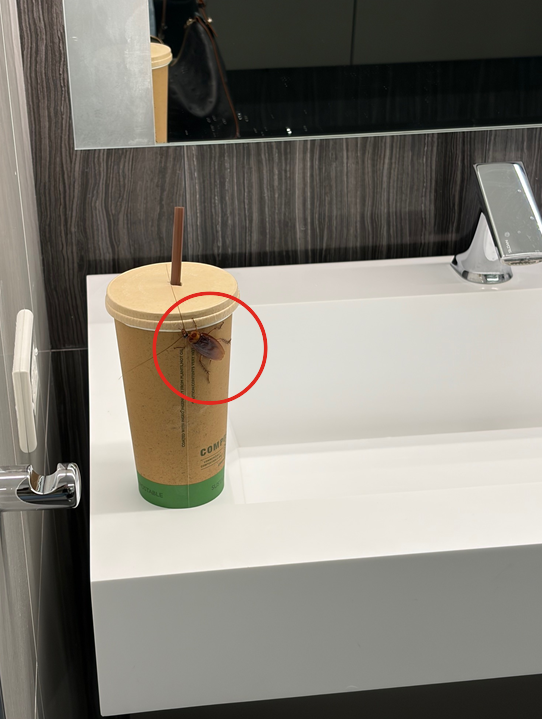
American cockroaches live outside. They enter through drains, gaps, and dry floor traps — not because your property is dirty.
How We Protect Your Property Against Occasional Invader Pests
Species Identification Before Treatment Occasional invaders are a mixed category — crickets, centipedes, millipedes, earwigs, stink bugs, scorpions, and others each respond to different products and placement strategies. We identify what’s coming in before we treat, which determines where we treat and what we use.
Perimeter Treatment The most effective occasional invader control happens outside before they get in. We treat the foundation, entry points, and harborage zones — mulch beds, landscape borders, wood piles, and moisture areas adjacent to the structure — with targeted residuals that intercept pests at the source.
Exclusion Chemical treatment buys time. Exclusion solves the problem. We identify and seal the gaps, cracks, and structural breaches that give occasional invaders access — door sweeps, utility penetrations, foundation gaps, and weep screeds are the primary entry routes on Southern California properties.
Moisture Management Most occasional invaders are moisture-dependent. Centipedes, millipedes, earwigs, and silverfish are all drawn to damp conditions. We identify the moisture sources sustaining pressure — irrigation patterns, drainage issues, and landscaping contact with the structure — and share what can be corrected.
Residential and Commercial Properties From single-family homes to commercial facilities, occasional invader pressure is property-specific and seasonal. Janus assesses each account individually and recommends service frequency that matches actual conditions.
Occasional Invaders Common to Greater Los Angeles
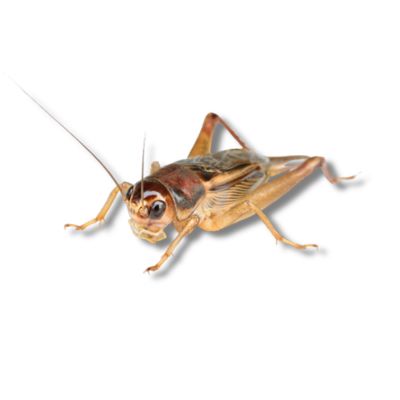
Field Cricket
(Gryllus spp.)
Crickets are among the most common occasional invaders in Southern California — harmless individually, but a single cricket behind a wall or under an appliance at 2am is its own kind of problem. They’re drawn indoors by light and warmth as temperatures drop in late summer and fall, entering through gaps at doors, windows, and foundation voids. Once inside, they’ll feed on fabric, paper, and stored goods. Outdoors they congregate in mulch beds, ivy, and dense ground cover adjacent to the structure — the same conditions that sustain ant and earwig pressure. A perimeter treatment that addresses cricket harborage zones handles the problem before it gets through the door.
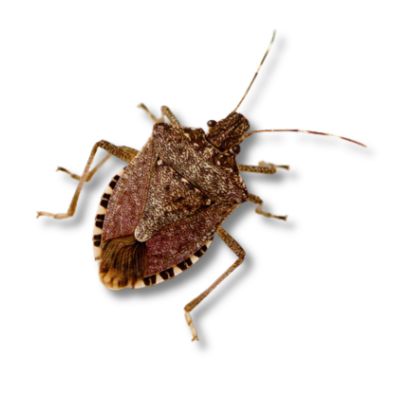
Brown Marmorated Stink Bug
(Halyomorpha halys)
An invasive species originally from East Asia, the brown marmorated stink bug arrived in the U.S. in the late 1990s and has steadily expanded its range across California. It’s a seasonal invader — as temperatures drop in fall, adults actively seek overwintering sites inside structures, entering through gaps around windows, doors, and utility penetrations. Once inside they go largely dormant, but warmth from heating systems can trigger activity mid-winter. The name earns its keep — when disturbed or crushed, the bug releases a distinctly unpleasant odor from glands on its abdomen. Outdoors it feeds on fruit trees, ornamentals, and vegetable gardens, making it a dual nuisance for homeowners with landscaped properties.
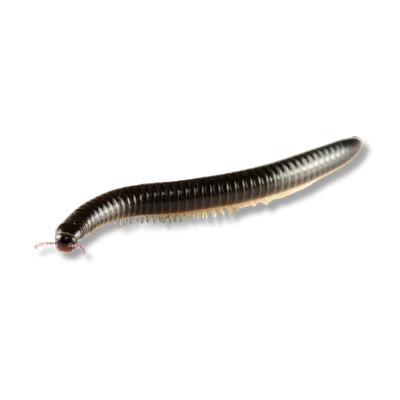
Millipede
(Narceus americanus / Oxidus gracilis)
Millipedes are moisture-driven and largely harmless — they don’t bite, sting, or damage structures. What they do is show up in numbers, which is enough. They thrive in decomposing organic matter: mulch beds, leaf litter, compost, and wood piles adjacent to the foundation. When seasonal rains saturate their outdoor habitat or drought conditions drive them to seek moisture, they migrate — often en masse — toward structures and find their way inside through foundation gaps, door sweeps, and weep screeds. A single wet season can produce a significant migration event on properties with heavy landscape mulch against the structure. Reducing moisture and organic debris at the foundation line is the most effective long-term deterrent — perimeter treatment intercepts the migration when conditions make it inevitable.
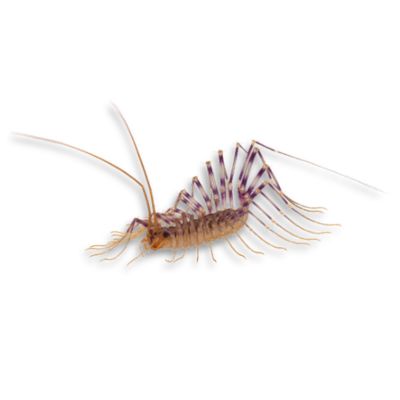
House Centipede
(Scutigera coleoptrata)
The house centipede is the one that makes people scream — 15 pairs of long banded legs, fast, and seemingly appearing from nowhere. Unlike most occasional invaders it doesn’t just pass through; it actively hunts inside structures, feeding on silverfish, cockroaches, spiders, and other small arthropods. Its presence indoors is often a signal that other pest pressure exists — centipedes follow the food supply. They’re moisture-dependent and enter through foundation gaps, drains, and utility penetrations, concentrating in bathrooms, basements, and crawl spaces where humidity is highest. The good news is they’re solitary and don’t establish colonies. The bad news is they’re fast enough that DIY control is more theatrical than effective. Addressing the moisture conditions and prey population that sustain them is the lasting fix — perimeter treatment handles the entry pressure.
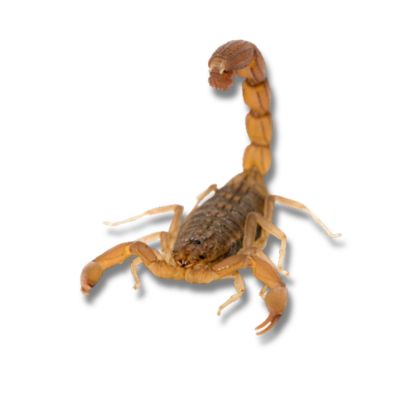
Scorpion
(Paravaejovis spinigerus — Stripe-Tailed Scorpion)
The scorpion is the occasional invader that gets the most attention — and in foothill communities across greater Los Angeles, it earns it. The stripe-tailed scorpion is the species most commonly encountered on Southern California properties — nocturnal, venomous, and capable of squeezing through gaps as narrow as a credit card. They enter structures through foundation cracks, weep screeds, and gaps around plumbing penetrations, concentrating in garages, attics, and ground-floor rooms. Their sting is painful but not medically significant for most healthy adults — the exception is the bark scorpion (Centruroides sculpturatus), occasionally documented in the eastern edges of Los Angeles County, whose venom requires medical attention. Scorpions are UV-fluorescent — a black light inspection is the most effective detection tool after dark. Exclusion, perimeter treatment, and reduction of harborage conditions around the foundation are the core control strategies.
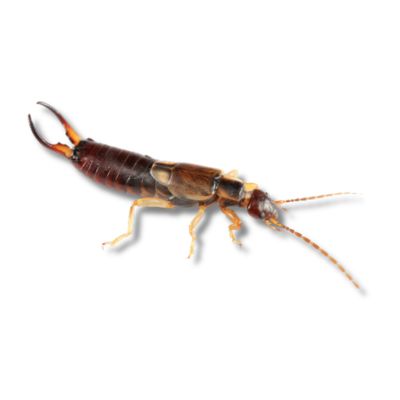
Earwig
(Forficula auricularia — European Earwig)
The earwig’s pincers make it look more dangerous than it is — they’re used for defense and mating, not attack, and they pose no medical threat to humans. What earwigs do well is show up where they’re not wanted: bathrooms, kitchens, laundry rooms, and anywhere moisture collects near the foundation. They’re nocturnal, strongly moisture-dependent, and feed on decaying organic matter, soft plant tissue, and occasionally other insects. Outdoors they concentrate in mulch, leaf litter, and dense ground cover against the structure — the same harborage zones that sustain millipede and cricket pressure. They enter through foundation gaps, door sweeps, and weep screeds, typically in numbers when outdoor conditions become unfavorable. The folklore about earwigs burrowing into ears while people sleep is just that — folklore. The reality is annoying enough without embellishment.
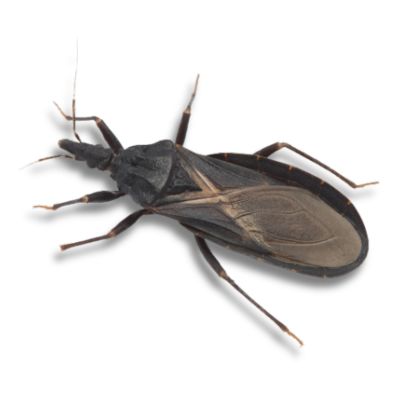
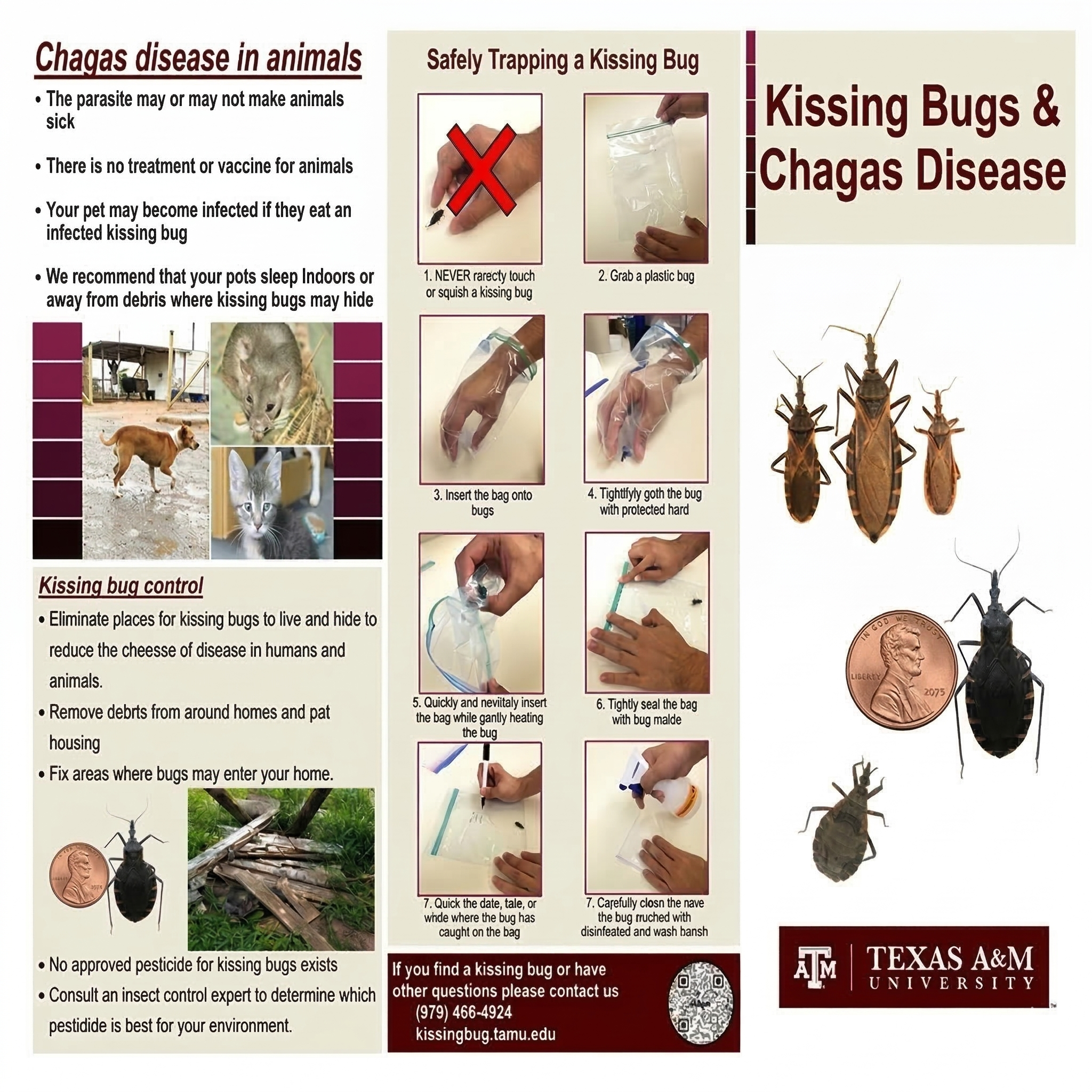
⚠️Download the Texas A&M Kissing Bug & Chagas Disease reference guide — identification, safe handling, and exposure reduction.
⚠️What About Kissing Bugs?
Triatoma protracta — the conenose or “kissing bug” — is native to California and increasingly documented in foothill and rural communities across Los Angeles and San Diego counties. Attracted to light and active at night, these bugs inhabit woodrat nests and rocky terrain near homes. Studies have found 28–55% of tested California kissing bugs carry Trypanosoma cruzi, the parasite that causes Chagas disease.
Locally acquired human cases remain rare — most diagnosed cases in California trace to travel or residence in Latin America. However, bites are common and can cause severe allergic reactions in sensitive individuals. The risk is real enough that LA County has made Chagas disease reportable since 2019.
If you find one inside: Do not crush it. Use a container to capture and seal it for identification. Contact your healthcare provider if you develop symptoms following a bite.
Janus identifies conditions conducive to kissing bugs, such as foundation gaps, woodpiles, and debris that offer shelter. We also check for rodent activity and animal nests, which provide the bugs with both a primary habitat and a consistent food source.
🎙️ Hear From the Experts
UC Riverside entomologist Dr. Doug Yanega breaks down the kissing bug — give it a listen.
Since this episode aired, Chagas disease has been formally recognized as endemic in the United States by the CDC (2025). California has the highest number of infected residents in the U.S. — an estimated 70,000–100,000 — and an estimated 45,000 people in Los Angeles County may be infected, with fewer than 2% aware they carry the parasite, according to UCLA Health. Kissing bugs are well established in SGV foothill communities — and awareness is only beginning to catch up.

ProTip: Outdoor Lighting
Some types of outdoor lighting attract insects more than others…
View Tips
ProTip: Outdoor Lighting & Insect Attraction
Outdoor lighting is one of the most overlooked drivers of occasional invader pressure. As part of a sound IPM strategy, managing light spectrum is a low-cost, high-return structural modification.
The Attraction Hierarchy
Not all bulbs draw insects equally. From highest to lowest attraction:
- Incandescent — avoid near entries entirely
- Compact Fluorescent & Halogen — moderate attraction
- Cool-White LED — lower attraction
- Warm-White LED / Yellow Spectrum — lowest attraction
The key variable is wavelength. Mercury vapor lamps emit high amounts of UV and blue-white light, making them among the most attractive artificial sources for night-flying insects. High-pressure sodium lamps emit a yellow-orange glow with minimal UV — significantly less attractive at entry points. Both UC IPM and the CDC recommend transitioning outdoor lighting to yellow-spectrum LED or sodium vapor at structure entries as a primary strategy for reducing pest pressure.
The Push-Pull Strategy
For commercial properties, estates, and multi-structure sites, lighting can be deployed strategically to redirect pest pressure away from occupied structures:
- Push — Sodium vapor (Na) fixtures mounted on the structure minimize attraction at entry points
- Pull — Mercury vapor (Hg) fixtures positioned at the perimeter draw insects away from the building
Position mercury vapor fixtures well away from the building — a parking lot or perimeter boundary works well — to draw insects away from occupied areas, while sodium vapor fixtures at entries reduce pressure where it matters most.
Janus incorporates lighting assessment into some commercial site surveys as part of a broader exclusion and environmental management program.
Janus Service Guarantee
Effective pest suppression—Guaranteed results: Sighting target pests between your scheduled visits? Janus will return and re-treat the area at no additional cost to you.
At Janus Pest Management, we recognize that effective control of occasional invader pests requires more than perimeter sprays — it requires understanding how each species exploits environmental and structural vulnerabilities to establish and persist in otherwise well-maintained properties.
Schedule an Inspection Today — Or Call (888) 526-8744
Get Rid of Pests Today
Targeted Solutions for Whatever Bugs
Pest treatment strategies vary depending on species.
Carpet Beetles
Crickets
Millipedes
Centipedes
Pillbugs
Sowbugs
Earwigs
Stinkbugs
Silverfish
Scorpions
Springtails
Boxelder bugs