
Mosquito Control
Janus Pest Management
Service On Your Terms
One-Time | Monthly | EOM | Quarterly | Semi-Annual | Custom
Free site survey available.
Professional Mosquito Control — San Gabriel Valley
Mosquito Control Is a Public Health Service
Mosquito control is more than a comfort service — it’s a public health measure. The San Gabriel Valley’s extended warm season supports sustained pressure from three primary genera: Culex, Aedes, and Anopheles — vectors for West Nile Virus, Dengue, and Chikungunya. The invasive Asian tiger mosquito (Aedes albopictus), now established across much of Southern California, has extended that risk beyond the traditional dusk-to-dawn window — it bites during the day, aggressively, and is increasingly encountered in residential yards across the region.
Reducing the mosquito population on your property isn’t just about comfort. It’s about reducing your family’s exposure to diseases that are present, documented, and trending in greater Los Angeles.
Effective control starts with identifying active breeding and resting sites — then applying targeted treatments that reduce pressure at the source.
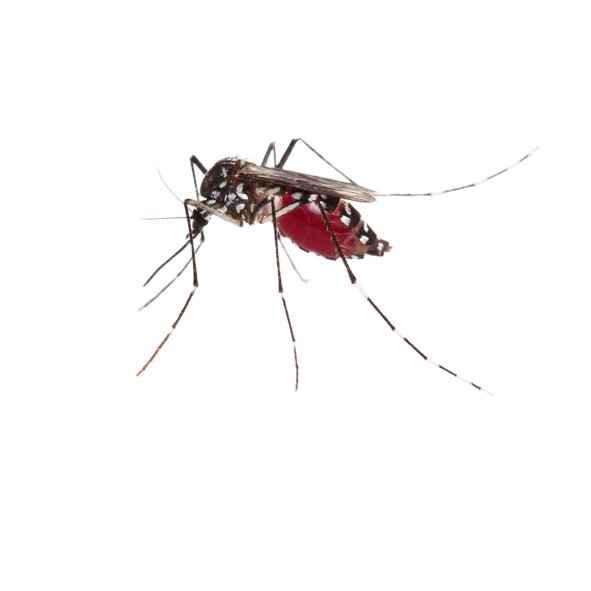
Eye-Biting (BLACK) Flies & Mosquito Treatments
Homeowners with established landscaping on a mosquito treatment program often report a welcome side effect — a noticeable reduction in black fly activity as well. The two pests share overlapping breeding and harborage conditions, and treating foliage and vegetation that supports one frequently suppresses the other. Even a single treatment can yield several weeks of noticeably reduced black fly activity. Janus treats for both — call or message for details. Properties with minimal landscaping are unlikely to see the same benefit.
UC Riverside entomologist Dr. Doug Yanega breaks it down — give it a listen:
How Janus Reduces Mosquito Activity
Effective mosquito control starts with identifying conducive conditions, then applying the right solution for your property. Every property is different — and not all mosquitoes travel the same distance from where they breed. Aedes rarely venture beyond 300 feet, Culex may range up to a mile, and Anopheles can travel several miles. The source may be on your property or well beyond it — either way, targeted treatment solutions are available.
Better Results Through Partnership
The most effective results come from a partnership — professional treatment targeting adult populations, combined with routine reduction of standing water and conducive conditions that support mosquito development on your property.
Professional Application & Coverage
We treat foliage, harborage areas, and accessible breeding sites where mosquitoes rest during daylight hours. Two chemistry options available:
- Green Chemistry: Eco-friendly botanical formulations for environmentally sensitive properties and families seeking reduced-risk solutions
- Traditional Chemistry: Multi-mode of action materials for maximum efficacy and extended residual control
Both treatments suppress mosquito populations for approximately 30 days—reducing disease exposure risk and improving outdoor comfort. This is the basis of our seasonal service cycle (April–November).
One-Time Event Services
Hosting a backyard graduation, wedding, or outdoor event? A single pre-event treatment dramatically reduces mosquito activity. We serve residential and commercial events of all sizes. Contact us 7–10 days before your event.
In2Care Mosquito Traps
A targeted, low-chemical option that can reduce populations up to 80%. Ideal for properties with budget considerations, minimal foliage, or pesticide concerns. Most homes require 2–3 traps. Many clients combine traps with barrier treatments for comprehensive control. We’ll assess your property and recommend the right approach based on your landscape, budget, and pest pressure. Learn more about In2Care Mosquito Stations — See how they work ↓
The Primary Vectors: Main Sources of Mosquito Bites in SGV
These genera account for nearly all mosquito-related risks in the San Gabriel Valley. While our professional treatments target adult populations and harborages, effective long-term control requires a collaborative effort: Eliminate all standing water weekly to disrupt the rapid breeding cycle at the source.
Culex Genus (e.g., Southern House Mosquito) Aedes Genus (e.g., Yellow Fever or Asian Tiger Mosquito) Anopheles Genus (e.g., Western Malaria Mosquito)
Culex Genus (e.g., Southern House Mosquito)
-
Activity Period: Night biter. Primarily active from dusk to dawn, with peak activity levels occurring between 8 PM and midnight.
-
Breeding Sites: Stagnant or nutrient-rich water. Thrives in dirty water sources such as storm drains, neglected bird baths, catch basins, and unmaintained swimming pools.
-
Bite Sites: General exposure. Targets any exposed skin, including the face, neck, arms, and legs. Their bites are often persistent and can be quite painful.
-
Disease Vector: The primary vector for West Nile Virus (WNV)—the most significant local mosquito-borne health concern in Southern California.
Mosquitoes Use Six Needles to Suck Your Blood
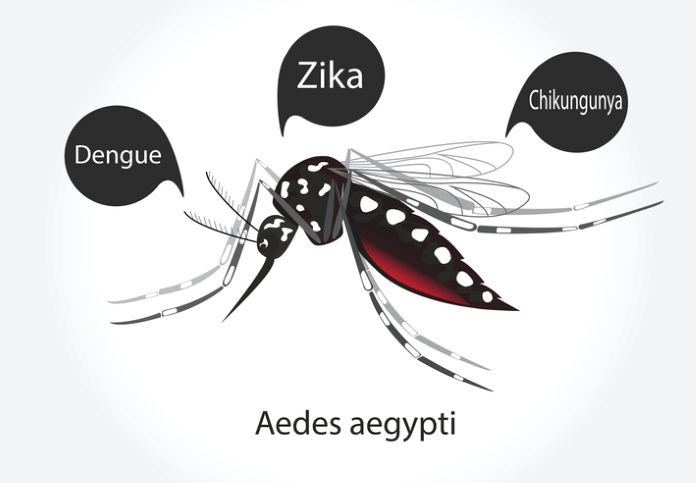
Aedes Genus (e.g., Yellow Fever or Asian Tiger Mosquito)
-
-
Activity Period: Aggressive daytime biter. Active throughout the daylight hours, with distinct activity peaks in the early morning and late afternoon.
-
Breeding Sites: Small-volume containers. These mosquitoes thrive in tiny water deposits such as flower pot saucers, buckets, discarded tires, and even bottle caps.
-
Bite Sites: Low-body preference. Primarily targets ankles, feet, and legs, though they will bite any exposed skin; often characterized by multiple, painful bites in a single session.
-
Disease Vector: Primary carrier for Dengue and Chikungunya. Local transmission remains rare, but the vector is established and expanding across Southern California
-
Anopheles Genus (e.g., Western Malaria Mosquito)
- Activity Period: Crepuscular biter. Activity peaks at dusk and dawn, with occasional activity through the night.
- Breeding Sites: Clean, natural water sources. Prefers marshes, ponds, and slow-moving streams — commonly found along the foothill edges and rural boundaries of the San Gabriel Valley.
- Bite Sites: Exposed extremities. Shows a preference for feet and ankles; known for a hovering flight pattern before biting. Less aggressive than Aedes but persistent.
- Disease Vector: Primary local vector for Malaria (Plasmodium parasites). While malaria is not endemic in California, Anopheles can transmit it if they bite an infected traveler. Also a known vector for Dog Heartworm (Dirofilaria immitis) — a serious and potentially fatal condition for dogs and cats.
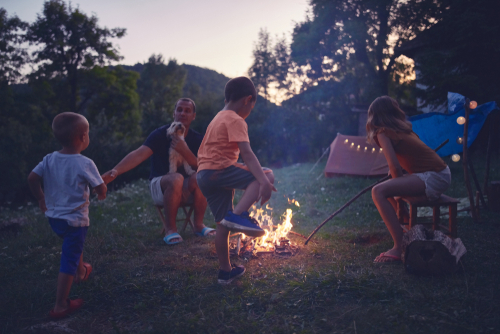
Anopheles Mosquito Active During Dusk & Dawn
ProTip: Mosquito Repellants
CO2, heat, scent — mosquitoes use all three to find you.
View Tips
Mosquitoes detect CO2 from up to 70 feet away, then lock on using heat and scent. DEET blocks their CO2 receptors, effectively “blinding” them.DEET tip: 7–10% provides about 90 minutes of protection for most activities—higher concentrations simply last longer, not stronger. Always follow the label for safe application.Other reliable options:
- Picaridin — odorless, non-greasy DEET alternative
- IR3535 — mild synthetic
- Oil of lemon eucalyptus — plant-based with a natural scent
At Janus Pest Management, we identify breeding sites on your property and share simple steps you can take to reduce mosquitoes. We offer effective treatments—including “green”/eco-friendly options, traditional methods, and integrated strategies—so you can enjoy your backyard without the buzz.
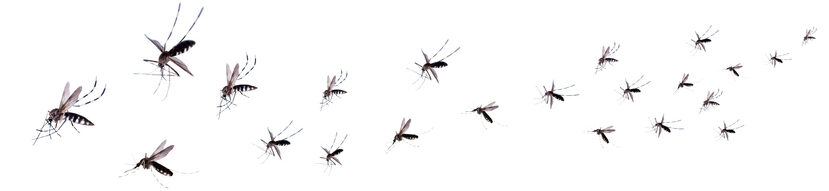
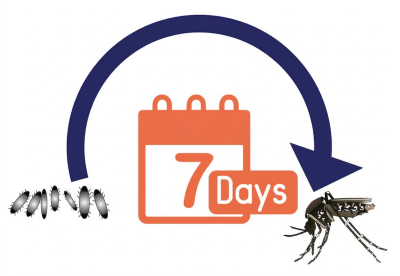
Empty Standing Water Weekly
Mosquitoes can grow from egg to adult in about a week!
Enough With The Mosquitoes!
Source Reduction: Hit Them Where They Breed
Eliminate Conducive Conditions for Sustained Results
Lasting mosquito control requires disrupting the breeding cycle — not just treating adult populations. Mosquitoes can complete their life cycle in as little as seven days, so eliminating standing water weekly is the single most effective thing a property owner can do between treatments.
Eliminate Small Containers: Aedes mosquitoes lay eggs in remarkably small volumes — pot saucers, buckets, and discarded tires. Empty, scrub, or cover these weekly.
Inspect High and Low: Clogged gutters and recessed drains are primary Culex breeding sites. Ensure all drainage systems flow freely.
Reduce Harborage: Dense vegetation provides the shade and humidity mosquitoes need to survive California’s heat. Keep lawns manicured and shrubs trimmed.
Download the GLACVC Mosquito Source Checklist to audit your property.
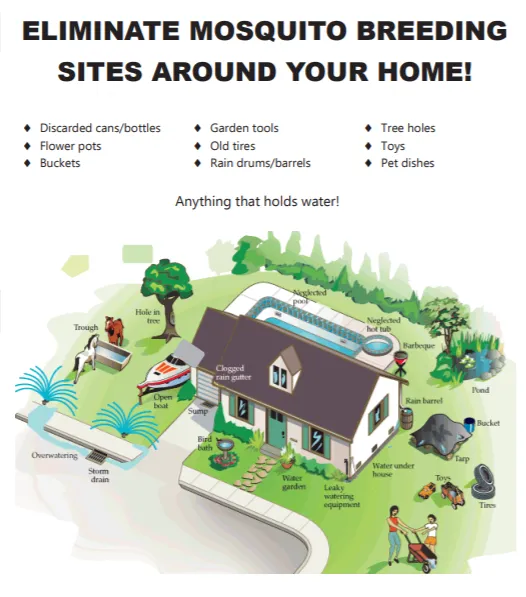
Leaf Litter & Mosquito Breeding
Leaf litter in shady parts of the yard creates breeding conditions as productive as standing water, but far less obvious. Several mosquito species common to Southern California lay eggs directly in moist organic debris. Those eggs can overwinter and hatch when spring rains return.
In2Care Mosquito® Stations – Smart, Eco-Friendly Control
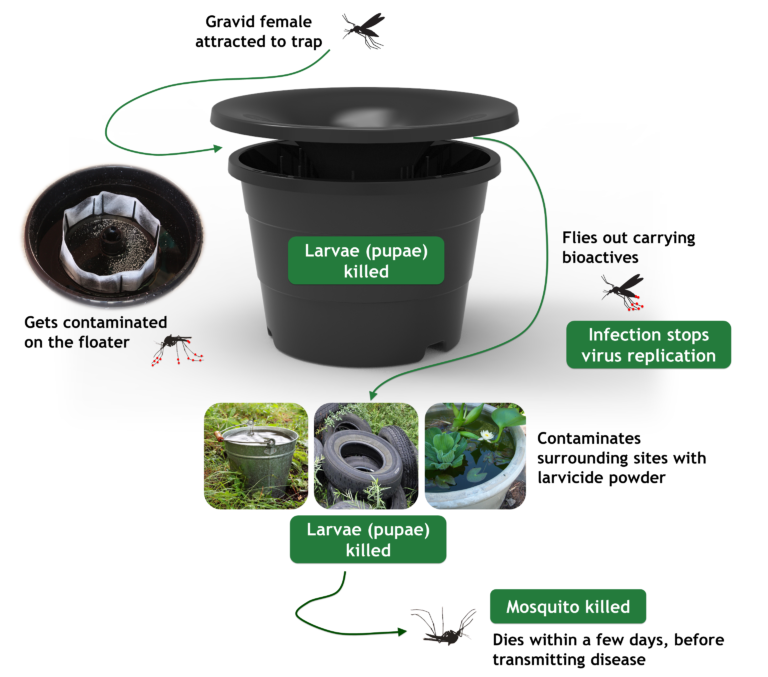
Smart, Eco-Friendly Mosquito Control
At Janus Pest Management, we recognize that effective mosquito control requires more than perimeter sprays — it requires understanding how each species exploits landscaping, moisture, and structural vulnerabilities to establish and persist in otherwise well-maintained properties.