
Rodent Control
Janus Pest Management
Service On Your Terms
One-Time | Monthly | EOM | Quarterly | Semi-Annual | Custom
Free site survey available.
Professional Rodent Control San Gabriel Valley
The Janus Advantage: Species-First Inspection. Exclusion-Based. Results-Driven.
Finding evidence of rodents — gnaw marks, droppings, nesting material in an attic — isn’t just a nuisance. It’s a health issue that compounds quickly if the source isn’t identified and addressed correctly.
Rodents spread disease directly through contact with their droppings, urine, and saliva, and indirectly through the ticks, mites, and fleas they carry. The list of documented rodent-transmitted diseases includes Hantavirus, Leptospirosis, Rat-Bite Fever, Salmonellosis, and Murine Typhus — several of which are present in California.
In California, two introduced commensal rat species — the Norway rat and the roof rat — are present in almost all cities and commonly live in close association with people. The house mouse (Mus musculus) rounds out the three most common structure-infesting rodents in the San Gabriel Valley. All three share the same neighborhoods but occupy different environments, enter structures through different routes, and require different control strategies. Treating without identifying the species first is one of the most common reasons rodent programs fail.
Janus identifies the species, locates the entry points, and addresses the conditions sustaining the population — before a single trap is set.
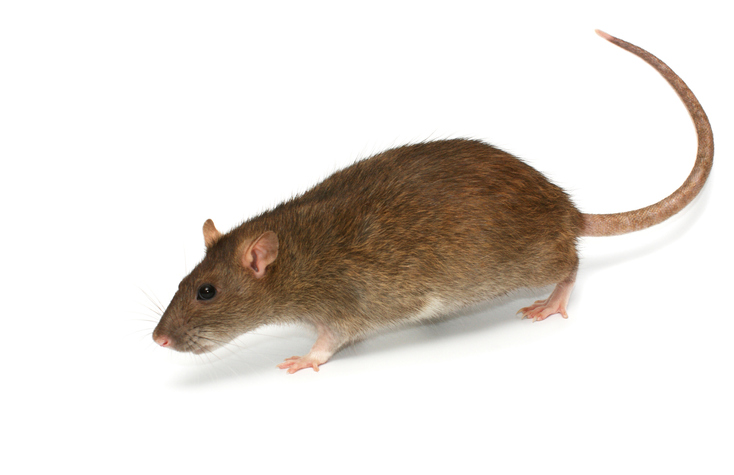
Norway Rat
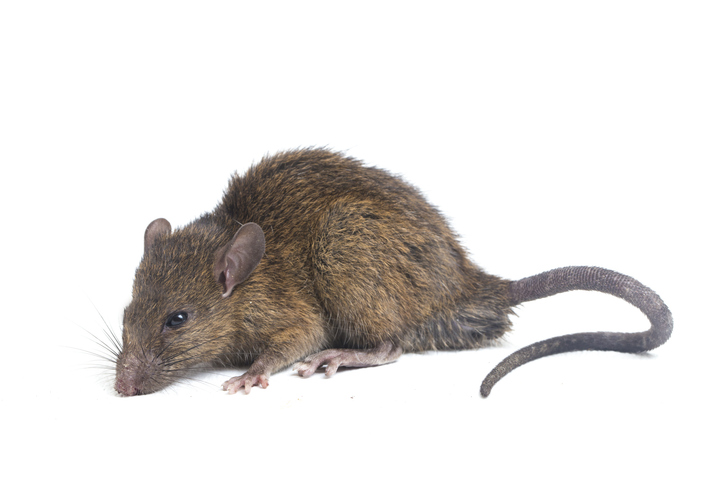
Roof Rat
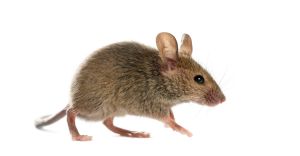
House Mouse
Janus Service Guarantee
Effective pest suppression—Guaranteed results: Sighting target pests between your scheduled visits? Janus will return and re-treat the area at no additional cost to you.
How We Protect Your Property From Rodents
Species Identification Before Treatment The single most important step in rodent control is identifying the species before deploying any traps or bait. Roof rats, Norway rats, and house mice require different strategies — different trap types, different placement heights, different bait selections, and different follow-up intervals. A snap trap on the floor won’t catch a roof rat living in the attic. We identify first, treat second.
IPM-Based Approach: Inspect. Exclude. Control. We locate entry points, assess the conditions sustaining the population — food sources, harborage, landscaping — and apply treatments precisely where they’ll be most effective. We share what can be corrected to support lasting control between service visits.
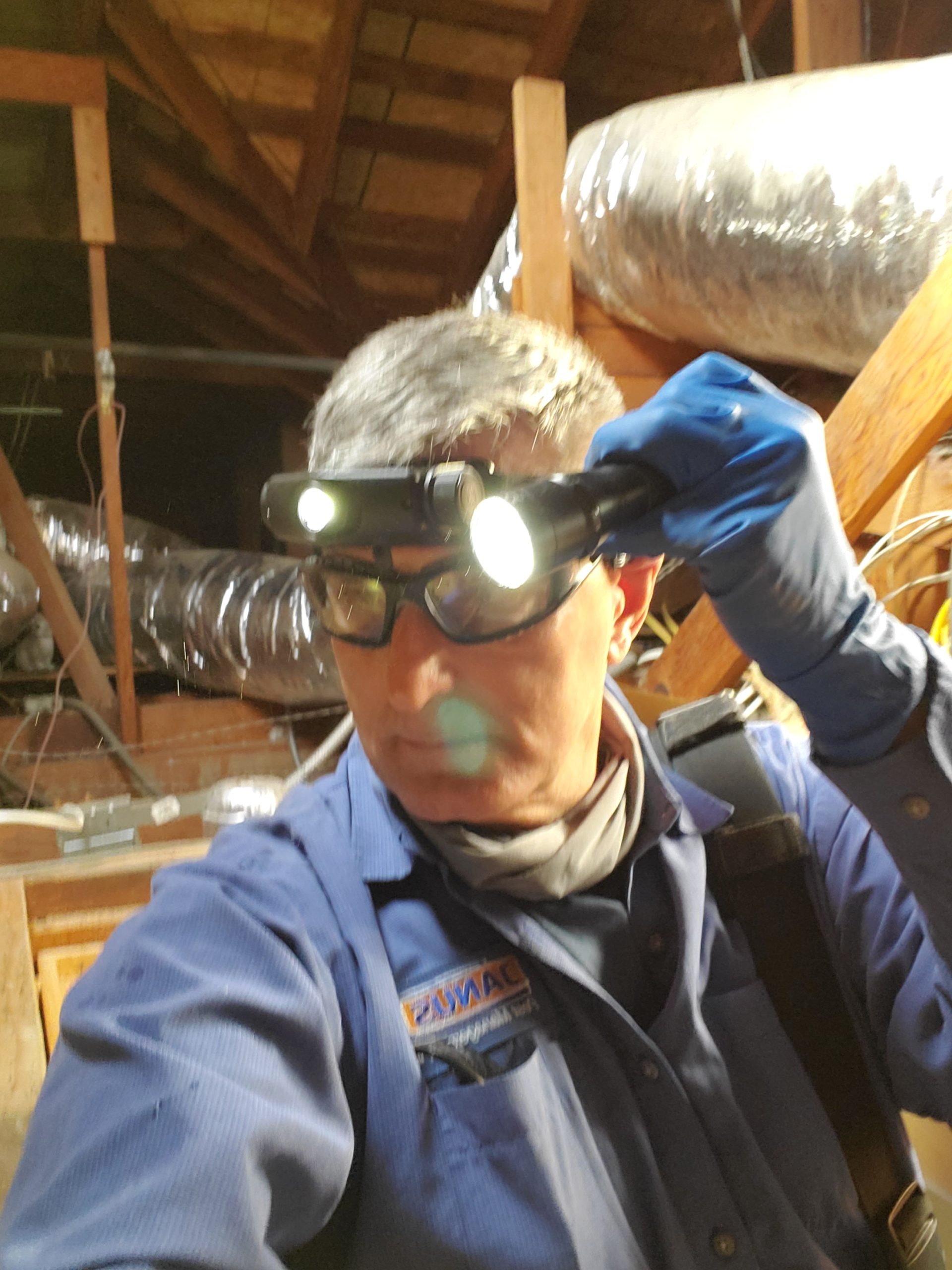
High-Rise and Commercial Expertise Rodent pressure in commercial buildings is rarely random. It originates from identifiable external sources — neighboring construction activity, dumpster proximity, utility corridors, and landscaping conditions adjacent to the structure. Our technicians provide accurate source attribution and help property managers navigate accountability between tenants and building ownership with clarity.
Residential and Multi-Family Properties From single-family homes with citrus trees and ivy to multi-unit apartment complexes — we inspect the roofline, subarea, and all exterior entry points before recommending a program. Ongoing service programs available for properties with persistent or recurring pressure.
The Janus Rodent Control Program
Rodent control isn’t a single visit. It’s a sequence — and skipping steps is why most programs fail.
Initial Inspection We start with a thorough walkthrough of your property — for a home, this includes the attic, garage, subarea, and full perimeter. We look for how rodents are getting in, where they’re living, and what’s attracting them. Entry points, active harborage, and conducive conditions — overhanging branches and vines that bridge to the structure, overgrown vegetation, wood piles, debris, and unsecured food sources — are all noted and discussed with you on the spot. We’ll tell you what we can address, what’s within your reach to correct, and where another tradesperson may be the right call. No surprises, no upsells you didn’t ask for.
Exclusion Identifying entry points during inspection is only half the equation. Where conditions allow, we seal them — closing the gaps, penetrations, and structural breaches that give rodents access to the building. For residential properties, that means roofline access points: overhanging tree limbs, utility lines, and damaged fascia are the primary entry routes for roof rats in the San Gabriel Valley. For commercial properties, ground-level gaps, dock doors, and dumpster proximity are the primary risk factors. Every entry point identified is documented and photographed. Property managers receive a written report of findings and corrective actions taken.
Trap Deployment and Monitoring Following inspection and initial exclusion work, traps are deployed in high-activity areas and monitored over multiple follow-up visits. We return several times to check activity, reset traps, relocate stations based on what the data shows, and assess whether pressure is declining. This is not a set-it-and-forget-it program.
Ongoing Maintenance For properties with active bait stations or traps in attics, subareas, crawl spaces, or mechanical rooms, we recommend monthly service — ensuring bait levels are maintained, traps are functioning, and new activity is caught early before populations reestablish. Quarterly programs are available for lower-pressure properties on a prevention schedule.
Additional Services Beyond trapping and monitoring, Janus can coordinate the full scope of post-rodent remediation — structural exclusion repairs, site disinfection, and attic insulation removal and replacement. Where specialized work is required, we refer trusted contractors we have long-standing relationships with. You get a qualified referral, not a cold search.
Hidden Dangers of Infestation Rodent damage to electrical wiring is a leading cause of residential fires with unknown origins. Damage typically occurs in attics and wall voids — hidden from view, long before any warning sign appears.
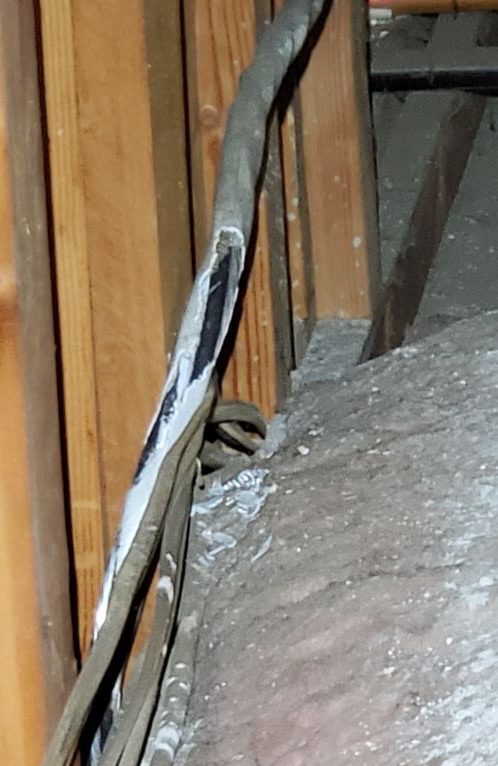
Caught on Camera: Roof Rat Activity in an Upland Attic
Recorded 05/02/26 early AM in Upland, CA.
What you’re seeing in this footage is a single rat on a single night. In an active infestation, this plays out every night — for months or years before a homeowner ever knows. In prolonged infestations, attic insulation becomes saturated with urine and feces — creating health risks that go well beyond the infestation itself.
Rodent Control for High-Visibility Commercial Facilities
For most commercial accounts, a well-placed tamper-resistant station, consistent service, and accurate documentation is exactly what’s needed — and that’s what we deliver. But for facilities operating under third-party audit requirements, or where discretion and aesthetics matter as much as results, we offer a more refined protocol built around structured exclusion, concealed monitoring hardware, and timestamped activity data that supports compliance reporting.
Descreet Rodent Control— Where it Matters
For commercial properties, museums, hospitality venues, and any environment where discretion matters, we deploy the PROTECTA EVO Landscape station — a tamper-resistant, rat-sized bait station designed to blend seamlessly into landscape beds. Realistic stone texture in sandstone and granite finishes. Invisible to guests, effective against rodents.
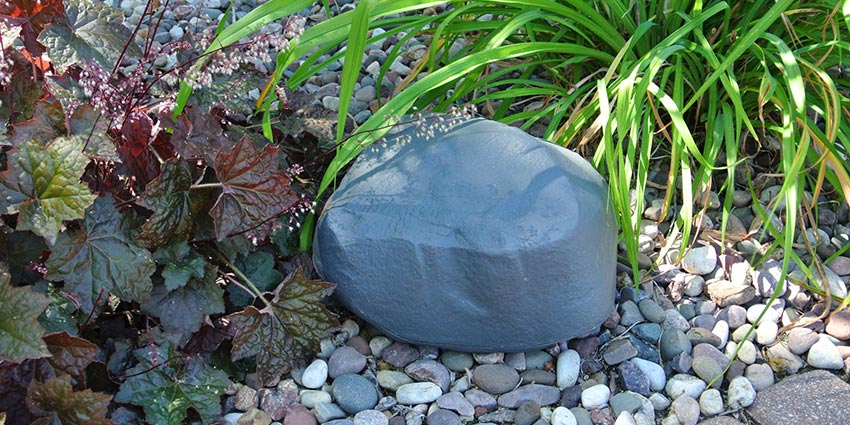
PROTECTA EVO Landscape — Discreet Station Placement
Ideal for hotel and resort grounds, museum courtyards, corporate campuses, healthcare facility perimeters, and any public-facing property where discretion is part of the standard — not an afterthought.

For utility corridors, mechanical rooms, and loading dock walls — the PROTECTA EVO Circuit installs flush against the wall. It reads as infrastructure. That’s the point.
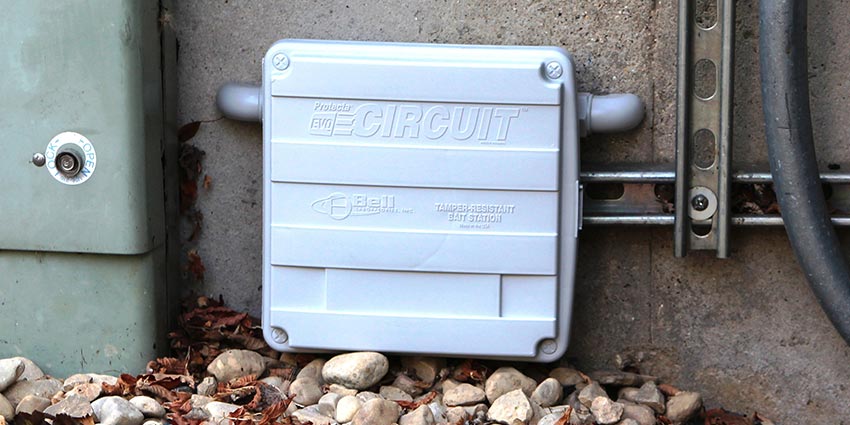
Smart Monitoring — Real-Time Activity Data
Bell Express iQ — Connected Rodent Monitoring
For commercial accounts where documented rodent activity data is required, Bell’s Express iQ smart monitoring is available as an optional upgrade. Each station timestamps rodent activity and transmits data via Bluetooth to our service app during each visit — giving property managers accurate activity reports, not assumptions.
The iQ upgrade is best suited for facilities operating under third-party food safety audit requirements — SQF, AIB, BRC, and similar programs where pest control documentation is a scored component. Food manufacturing, specialty warehousing, food distribution, and hospitality properties with brand standard compliance requirements are the accounts where this data matters most.
For most commercial accounts, a well-maintained station program with accurate service records is exactly what’s needed. The iQ is for facilities where the documentation itself is part of what’s being audited.
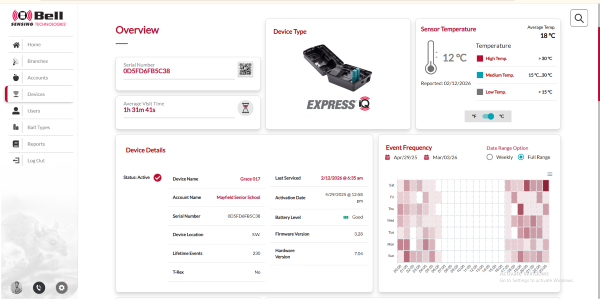
What the Data Shows Each Bell iQ station logs the date, time, and frequency of every rodent interaction. Janus technicians review this data during each visit, adjusting placement and treatment based on actual activity — not scheduled assumption. For audited facilities, that record is the proof — ready to present, real-time.
ProTip: Rodent Access Denied
Most entry points are structural — and most are fixable.
View Tips
ProTip: Structural Exclusion — Building Rodents Out
Reactive baiting manages rodents. Exclusion stops them. Rodents exploit structural compromises most homeowners never notice — and once they find a way in, they use it repeatedly. The goal is denying access before pressure builds.
Key Mitigation Points
- Roofline clearance — Trim tree limbs at least 4–6 feet from the structure. Roof rats use overhanging branches as a bridge to attic access points.
- Vent screens — Inspect sub-area and attic vents for damaged screening. These are among the most common entry points on Southern California properties.
- Gap and penetration sealing — Seal cracks and utility penetrations at the foundation using caulk, expansion foam, and copper wool. Rodents cannot gnaw through copper wool, making it a durable long-term barrier.
- Resource removal — Remove fallen fruit, fix leaking pipes, clear clogged gutters, and store pet food in metal containers. Removing food and moisture removes the reason to stay.
Janus assesses exclusion opportunities as part of rodent service — identifying the entry points and conducive conditions that sustain pressure, not just the activity itself.
At Janus Pest Management, we recognize that effective rodent control requires more than perimeter sprays — it requires understanding how each species exploits landscaping, moisture, and structural vulnerabilities to establish and persist in otherwise well-maintained properties.