
Cockroach Control
Janus Pest Management
Service On Your Terms
One-Time | Monthly | EOM | Quarterly | Semi-Annual | Custom
Free site survey available.
Professional Cockroach Control
The Janus Advantage: Species-Specific Treatment. IPM-Based. Results-Driven.
Finding a cockroach in your home or business isn’t just unsettling — it’s a health issue that gets worse the longer it goes unaddressed.
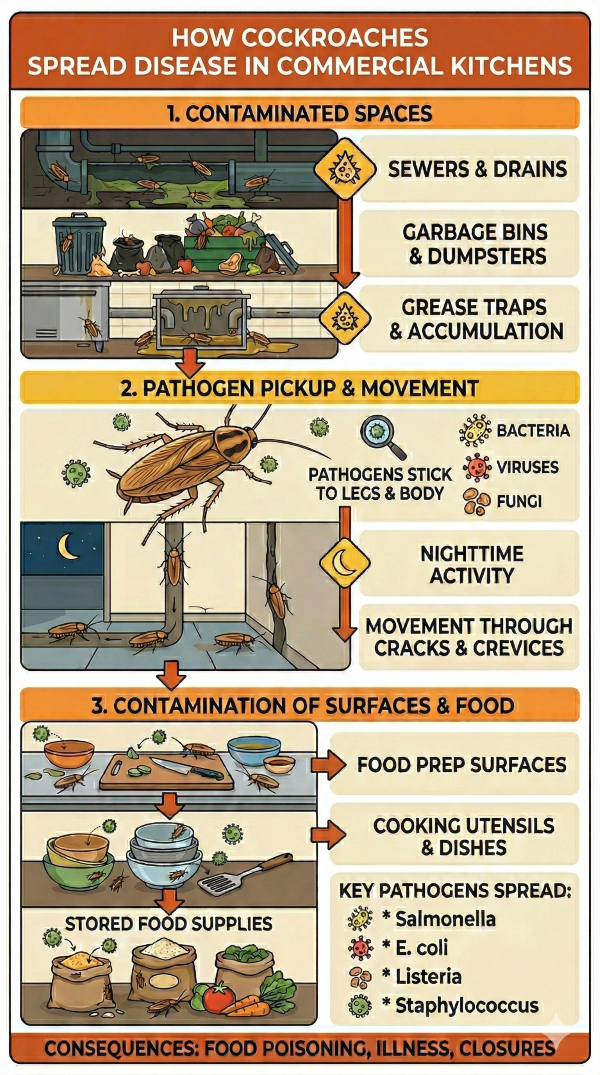
Cockroaches contaminate food surfaces, trigger asthma in children, and are confirmed vectors for Salmonella, E. coli, and Shigella. Recent peer-reviewed research suggests the risks are greater than most people realize.
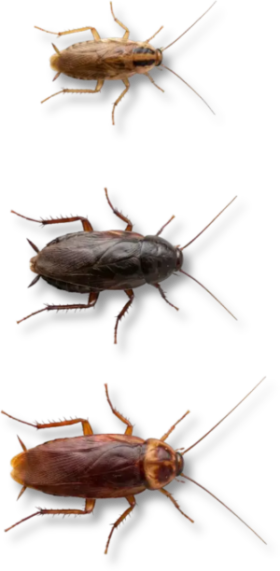
Not all cockroaches are the same. The three species most commonly found in the San Gabriel Valley — German, Oriental, and American — each require a different approach. Getting it right starts with knowing exactly what you’re dealing with.
Janus identifies the species, assesses the conditions sustaining them, and determines the most effective treatment for lasting control.
How We Protect Your Property From Cockroaches
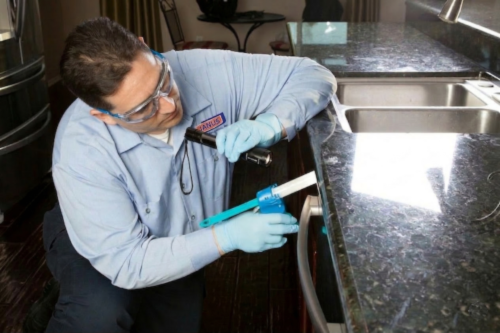
Species Identification Before Treatment The single most important step in cockroach control is identifying the species first. German, American, and Oriental cockroaches require different strategies — different harborage locations, different treatment methods, different follow-up intervals. Treating them the same way is one of the most common reasons cockroach programs fail. We identify the species before any product is applied.
IPM-Based Approach: Identify. Target. Control. We assess the conditions sustaining the infestation and apply treatments precisely where they’ll be most effective — then share what can be corrected to support lasting control.
High-Rise and Commercial Expertise Janus services Class-A commercial towers and high-rise residential properties — environments with two simultaneous cockroach challenges:
American cockroaches enter through floor drains, utility chases, and damaged pipe seals — a structural and facilities management responsibility.
German cockroaches are introduced through deliveries, catering, or guests, spreading through shared walls once established. Typically a tenant responsibility — unless traced to an adjacent unit or ground-floor food operation, at which point coordinated treatment becomes a building obligation.
Our technicians provide accurate source attribution and help property managers navigate accountability clearly, while respecting the tenant relationship.
Residential and Multi-Family Properties From single-family homes to restaurants and office buildings — we inspect before we treat. Ongoing programs available for properties with persistent activity.
Commercial Floor Drain Treatment Options — Pest Exclusion & Suppresion
Floor Drain Seals: Stopping American Cockroaches at the Source
In Class-A commercial towers and restaurants, floor drains are the primary entry point for American cockroaches migrating up from the municipal sewer system. Green drain trap seals — flexible silicone inserts that block entry while allowing water flow — are a standard exclusion tool in our high-rise service protocol. Janus selects the correct size for each drain and installs them as part of your service. Non-chemical, immediately effective, and invisible once installed. The video above shows why every commercial property with floor drains should have them.
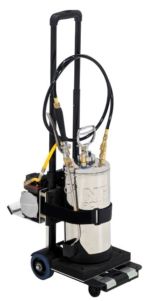
Drain Foaming — Stopping Roaches Before They Enter
Janus uses a pressurized foaming system to gently inject Nibor-D® — a mineral borate — deep into floor drain lines, penetrating 20+ feet into the drain system. The foam expands at a 20:1 ratio, coating organic debris and turning the drain interior into a long-lasting borate bait that eliminates American cockroaches before they can exit the drain and become visible to building occupants. Mineral-based, LEED-compliant, and standard in our high-rise commercial protocol for American cockroach and drain fly suppression.
The Primary Species: Cockroach Threats in the San Gabriel Valley
Three cockroach species account for the overwhelming majority of infestations in San Gabriel Valley homes and businesses. They share the same address but live in different environments, enter through different routes, and require different treatment strategies. Knowing which species you are dealing with is the first step toward actually solving the problem.
While professional treatment targets existing populations and harborage sites, long-term control requires a collaborative approach: eliminate food and moisture sources, seal structural entry points, and address conditions that sustain cockroach populations between service visits.
German Cockroach (Blattella germanica)
- Activity Period: Year-round, strictly indoors. Lives and breeds entirely within structures — activity never slows seasonally in Southern California’s climate. Reproductive rates accelerate significantly in warmer conditions — spring is the optimal window for intervention, before summer heat drives population growth.
- Habitat: Food preparation and warm, humid spaces. Kitchens, bathrooms, refrigerator motor voids, cabinet hinges, and wall voids near heat and moisture. In multi-unit buildings, spreads rapidly through shared walls and plumbing penetrations.
- Identification: Small, fast, and distinctively striped. Adults approximately 1/2 inch, light brown, two dark stripes on the pronotum. Seeing cockroaches in daylight means the infestation is already well established.
- Reproductive Rate: The fastest of all pest cockroaches. One female and her offspring can produce over 30,000 individuals in a year. Reproductive speed is highly temperature-dependent — every 10°F increase above 70°F roughly doubles the breeding rate, peaking at 86°F where a new egg case is produced and ready to hatch within 18 days. Early intervention matters — spring is the optimal window before summer heat accelerates the cycle.
- Health Risk: Pathogens, allergens, and endotoxins. Confirmed vectors for Salmonella, Staphylococcus, hepatitis virus, and coliform bacteria — with recent peer-reviewed research indicating the health risks are greater than previously understood. Purdue → NC State →
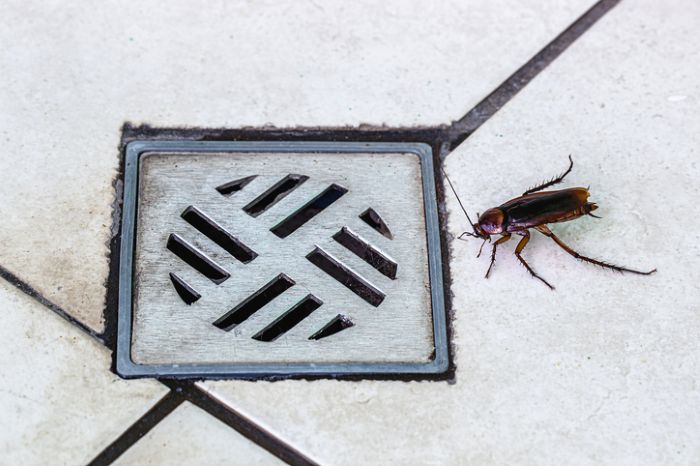

American Cockroach (Periplaneta americana)
-
Activity Period: Peridomestic, year-round. Prefers temperatures above 82°F — reproduction slows significantly below 70°F. In commercial buildings with consistent interior temperatures, activity and breeding continue year-round regardless of season. Unlike German cockroaches whose short lifecycle makes reproductive disruption a viable strategy, American cockroach nymphs take 6 to 12 months to reach maturity — making structural exclusion and source elimination the primary intervention.
-
Habitat: Sewers, drains, and dark utility spaces. The largest common pest cockroach — adults reach nearly 2 inches. Lives in municipal sewer infrastructure, migrating into buildings through floor drains, damaged pipe seals, and utility penetrations. In residential settings, most common in garages, crawl spaces, and around ground-level plumbing.
-
Identification: Large, reddish-brown, with a pale border. Distinctive pale figure-8 pattern on the pronotum. Both males and females can fly short distances on warm evenings — easily distinguished from German cockroaches by size alone.
-
Reproductive Rate: Significant but slower than German. One female and her offspring can produce over 800 cockroaches in one year. Adults can live up to 15 months — longer than any other common pest cockroach.
-
Health Risk: Direct sewer-to-surface pathogen transfer. Forages in sewers before entering homes and kitchens — capable of transferring Salmonella and Shigella directly from fecal matter to food preparation surfaces with no intermediate steps.
Oriental Cockroach (Blatta orientalis)
The Cool, Damp Dweller — Slower But Closer Than You Think
- Activity Period: Year-round, most active in cooler months. Unlike other cockroach species, Oriental cockroaches prefer cooler temperatures and are often most active in spring and early summer. They can build to large populations in outdoor masonry enclosures and migrate indoors at night in search of food, water, or mates.
- Habitat: Dark, damp ground-level environments. Found in garages, basements, crawl spaces, water meter boxes, and storm drains. Most common in single-family homes surrounded by dense ground cover — ivy, wood piles, and leaf litter are prime harborage. Cannot climb smooth vertical surfaces, so they are often found trapped in sinks or bathtubs after climbing up through damaged drain pipes.
- Identification: Dark, almost black, with a distinctive odor. Adults are approximately 1.25 inches, nearly black in color. Males have wings covering about 3/4 of the abdomen; females have only short wing stubs and cannot fly.
- Reproductive Rate: Slower cycle, longer development time. Development from nymph to adult can take 1 to 2 years. A female and her offspring can produce approximately 200 cockroaches per year — significantly fewer than German or American cockroaches, but populations build to large numbers in undisturbed outdoor harborage sites.
- Health Risk: Contaminated foraging environments. Oriental cockroaches forage in damp, contaminated environments — drains, sewage areas, decaying organic matter — before making contact with food surfaces or utensils. Their association with moisture sources and decaying material makes them vectors for bacteria consistent with their foraging environment.
- Treatment Note: Outdoor baiting in water meter boxes, around ground cover, and along fence lines. Drainage corrections and ground cover reduction are important cultural controls. Seal crawl space entry points and address moisture sources that sustain outdoor populations.
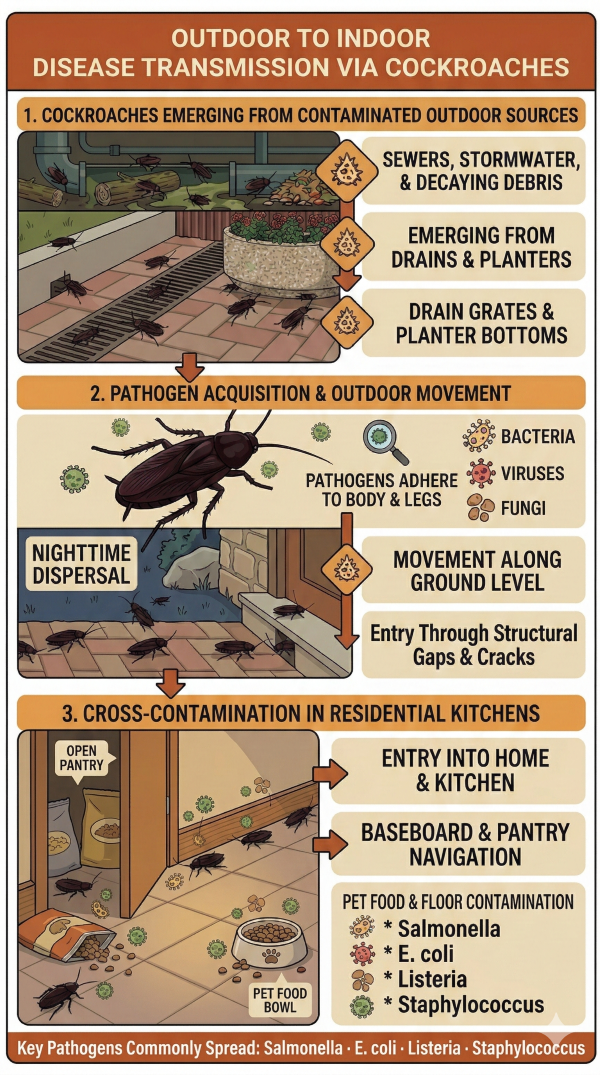
Oriental cockroach pressure is driven by conditions outside the structure. Our inspection identifies those conditions and addresses them at the source — reducing outdoor populations before they migrate in.
They cannot climb smooth vertical surfaces and are unable to fly — which means they are almost always found at or below ground level. If you’re finding them upstairs, there is an active plumbing or structural penetration issue that needs to be addressed.
Janus Service Guarantee
Effective pest suppression—Guaranteed results: Sighting target pests between your scheduled visits? Janus will return and re-treat the area at no additional cost to you.
ProTip: What Cockroach Activity Is Telling You
Where you see them — and which species — is the fastest diagnostic signal.
View Tips
ProTip: What Cockroach Activity Is Telling You
Where you’re seeing cockroaches — and which species — tells you more than how many. Distribution and species are the two fastest diagnostic signals.
German Cockroach (Blattella germanica) The most common indoor species in California. They prefer warm, humid areas close to food, water, and dark harborage — kitchens and bathrooms first. German cockroaches produce an aggregation pheromone that keeps light infestations clustered near resources. As pressure builds, they expand — hallways, living areas, then bedrooms and dresser drawers. Finding them in bedroom furniture or closets signals a heavy infestation that has saturated the primary zones.
Oriental Cockroach (Blatta orientalis) Lives in cool, dark, damp places — garages, basements, water meter boxes, and drains. Most likely near single-family homes surrounded by vegetation, woodpiles, ivy, and ground cover. Seeing them indoors is typically a moisture signal — drainage issues, irrigation patterns, or damp conditions around the foundation perimeter are the usual drivers.
American Cockroach (Periplaneta americana) Common in sewers, storm drains, and water meter boxes — occasionally foraging into ground-floor spaces, especially where pipes are damaged, screens are missing, or water traps in drains are faulty. A dry, unused shower or floor drain loses its trap seal and becomes a direct entry route from the sewer system. Running water down infrequently used drains periodically restores the seal.
When you call, note:
- Which rooms activity is concentrated in
- Daytime sightings often indicate heavier pressure
- A photo helps — species determines treatment strategy
At Janus Pest Management, we recognize that effective control requires more than material applications — it requires understanding how cockroaches exploit modern conveniences and supply chains to establish in otherwise well-maintained environments.