Gopher Control
Janus Pest Management
Service On Your Terms
One-Time | Monthly | EOM | Quarterly | Semi-Annual | Custom
Free site survey available.
Gopher Control
What’s Tunneling Through Your Yard?
Dirt mounds don’t lie — but they don’t always tell the whole story. What looks like a gopher problem may be ground squirrels, moles, or voles. Each species behaves differently, burrows differently, and requires a different control protocol. Misidentify the pest and the treatment fails.
Janus serves residential and commercial properties across greater Los Angeles — from small urban lots to large landscaped estates — with burrowing pest control programs tailored to site conditions and species pressure.
The Numbers
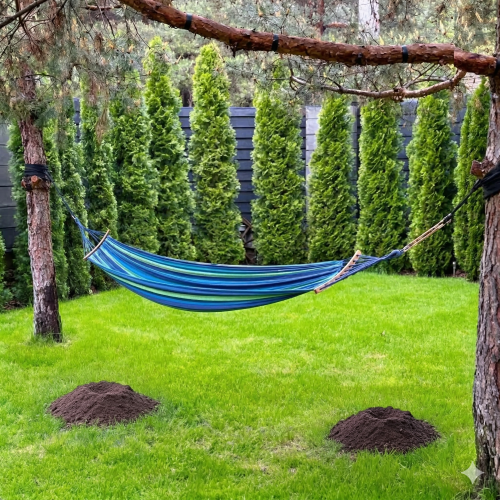
Pocket gophers are not occasional visitors. Under favorable conditions, a single acre can support up to 35 animals — meaning a standard 7,600 sq ft residential lot can host three to four active animals simultaneously. Each one is capable of consuming and destroying the root systems of dozens of plants per year while destabilizing soil, undermining irrigation lines, and accelerating erosion.
A single gopher can excavate up to 200 yards of tunnel and move roughly a ton of soil per year. That subsurface network doesn’t disappear when the animal is removed — collapsed tunnels create soft spots, uneven turf, and drainage problems that persist long after the infestation is resolved. A call to Janus starts the remediation.
How Janus Controls Gophers and other Burrowing Pests
Species Identification Before Treatment Effective burrowing pest control starts with reading the site correctly. Gopher mounds are crescent-shaped with plugged entrances. Ground squirrel burrows stay open with a debris field around the entry. Moles leave conical volcano mounds and heaved surface ridges. Voles leave no mounds at all — just small unplugged holes connected by worn runways through turf. Each requires a different approach. We identify before we treat.
Baits and Traps — Applied by Species Where baiting is indicated, we use registered rodenticides placed directly into active tunnel systems — below ground, out of reach of non-target animals. Trapping programs are deployed where baiting is not appropriate or where client preference or site conditions require a non-toxic approach. Method selection is always species- and site-specific.
Burrow Fumigation For larger properties, athletic fields, school grounds, and municipal turf, burrow fumigation delivers results where conventional methods alone fall short. Janus currently utilizes the BurrowRx system — an EPA and California-registered carbon monoxide fumigant introduced directly into active burrow systems. Carbon dioxide fumigation is also being evaluated as an additional tool for applicable sites.
Residential, Commercial, Schools & Municipal Properties Gopher and ground squirrel pressure on maintained turf is a liability — for homeowners, facilities managers, and grounds departments alike. Janus assesses each account individually and recommends a service approach matched to the scale of the infestation and the operational requirements of the property.
Burrowing Rodents Active in Greater Los Angeles
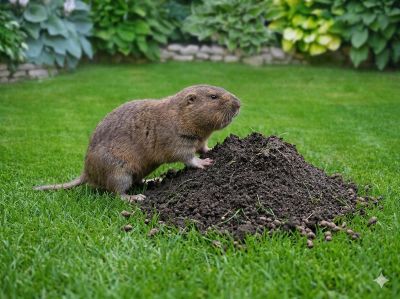
Pocket Gopher
(Thomomys bottae) A solitary, highly territorial rodent that rarely surfaces. A single animal can sever the root systems of dozens of plants per year while excavating up to 200 yards of tunnel. Populations peak in spring and fall — the two most active damage windows on Southern California properties.
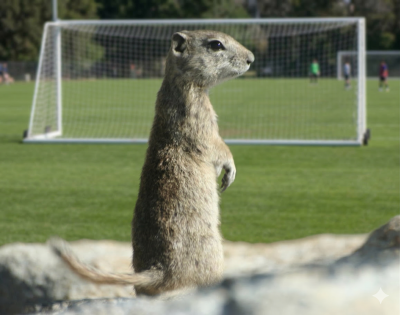
California Ground Squirrel
(Otospermophilus beecheyi) Colonial and diurnal — they’re active in full daylight and live in interconnected burrow networks that can undermine foundations, hardscape, and irrigation infrastructure. A single colony can number in the dozens. Carriers of fleas and associated with sylvatic plague in California.
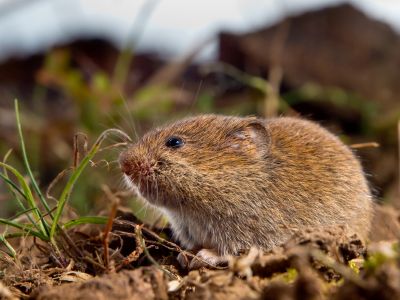
Vole
(Microtus californicus) Small but prolific — a single female can produce up to 100 offspring per year under favorable conditions. Voles feed on roots, bulbs, and bark at the soil line, causing damage that often goes undetected until plants fail. Populations cycle dramatically and can explode quickly in irrigated landscapes.
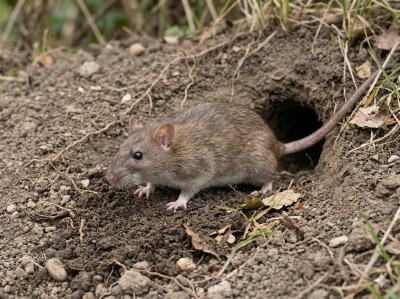
Norway Rat
(Rattus norvegicus) The most structurally destructive commensal rodent in the urban environment. Norway rats burrow along foundations, under slabs, and beneath vegetation — their activity is frequently misread as gopher pressure near structures. Capable of gnawing through utility lines, irrigation, and building materials.
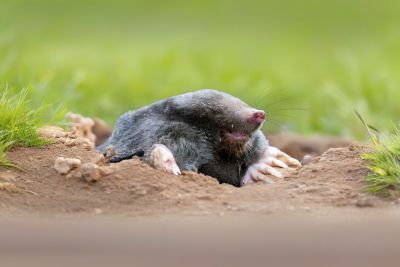
What About Moles?
Moles are not rodents — they’re insectivores, and their presence signals a different problem: a high-density subsurface invertebrate population they’re actively hunting. Mole activity is identified by symmetrical conical mounds and heaved, meandering surface ridges created by shallow feeding tunnels. Janus treats moles as part of our burrowing pest program. If you’re seeing volcano mounds or raised turf ridges, give us a call.
Home Turf Advantage for Burrowing Pests
Gophers — Ground Squirrels — Moles — Voles
Ground Game: Baits, Traps, and Burrow Fumigation
Janus deploys baits and traps selected and placed by species — applied above and below ground as site conditions dictate. For larger properties, fields, and commercial turf, burrow fumigation is available where it provides a decisive advantage over conventional methods alone.
Janus currently utilizes the BurrowRx system — an EPA and California-registered carbon monoxide fumigant delivered directly into active burrow systems. We are also evaluating carbon dioxide fumigation as an additional tool for sites where it offers operational advantages.
One-time service or ongoing maintenance programs — we match the approach to the infestation for results that are almost legendary.
Burrow Fumigation for Tough Turf Jobs.
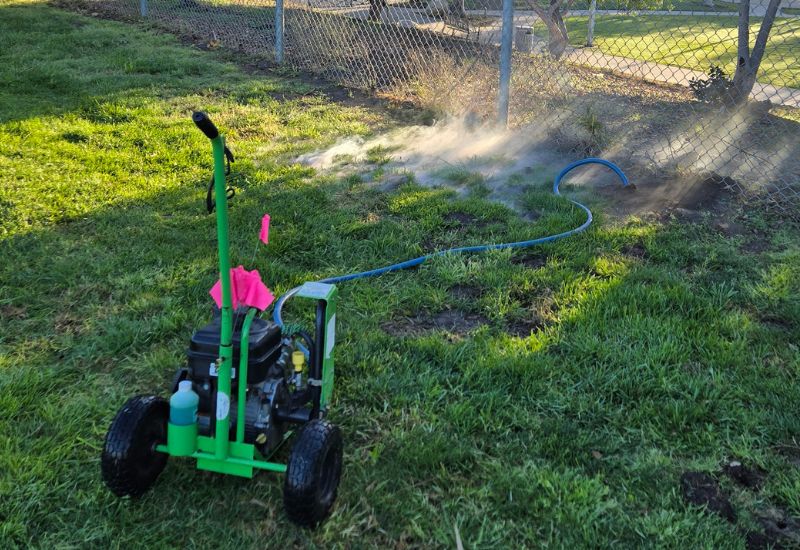
BurrowRx: Field-Proven Efficacy
Independent field trials recorded a 95.7% reduction in active ground squirrel burrows within 24 hours of treatment. Mineral oil vapor is used to identify active burrow structure during treatment.
Janus Service Guarantee
Effective pest suppression—Guaranteed results: Sighting target pests between your scheduled visits? Janus will return and re-treat the area at no additional cost to you.
ProTip: Mound Identification
Know the mound. Know the pest. Know the fix.
View Tips
Effective remediation begins with precise identification. Burrowing pests leave distinct architectural signatures in their mounds and tunnels. Reading those signatures correctly determines the treatment — get the ID wrong and the program fails before it starts.
Pocket Gopher — Horseshoe or crescent-shaped mounds of loose, fine earth with the burrow entrance plugged by a visible dirt cap. Tunnel systems run 6–12 inches below the surface.
California Ground Squirrel — Open, unplugged burrow entrances roughly softball-sized, surrounded by a scattered debris field of excavated dirt. Multiple entry holes are common. Active during daylight hours.
Mole — Symmetrical conical mounds at the surface, with heaved or meandering ridges across the turf — the signature of shallow feeding tunnels just below the sod line.
Vole — No mounds. Look for small, clean-cut unplugged holes approximately 1.5 inches in diameter, connected by visible runways worn into turf at ground level.
Norway Rat — Burrow entrances 2–3 inches in diameter along foundation edges, under debris, or at the base of vegetation. Smooth, worn entry with a clean-packed dirt ramp — frequently misidentified as gopher activity near structures.
Correct identification is the first step. Species, site conditions, and activity patterns all shape the remediation approach — a default program applied to the wrong pest produces predictable results.