
Ant Control
Janus Pest Management
Service On Your Terms
One-Time | Monthly | EOM | Quarterly | Semi-Annual | Custom
Free site survey available.
Professional Ant Control — San Gabriel Valley
The Janus Advantage: Species-First Treatment. IPM-Based. Results-Driven.
Ants are the number one pest call we receive — and the most commonly mishandled. A spray that sends one colony retreating simply relocates the problem, or worse, causes a single colony to fracture into several. Getting control that lasts starts with identifying the species.
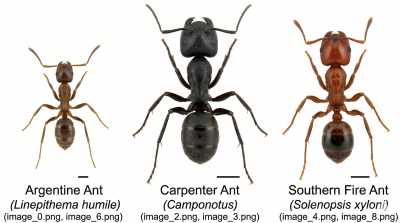
In the San Gabriel Valley, three ant species account for the majority of structural and landscape infestations: the Argentine ant, the carpenter ant, and the fire ant. Each exploits different conditions, nests in different environments, and requires a different treatment approach. Treating them the same way is one of the most common reasons ant programs fail.
Janus identifies the species, locates the colony source, and addresses the conditions sustaining the infestation — before a single treatment is applied.
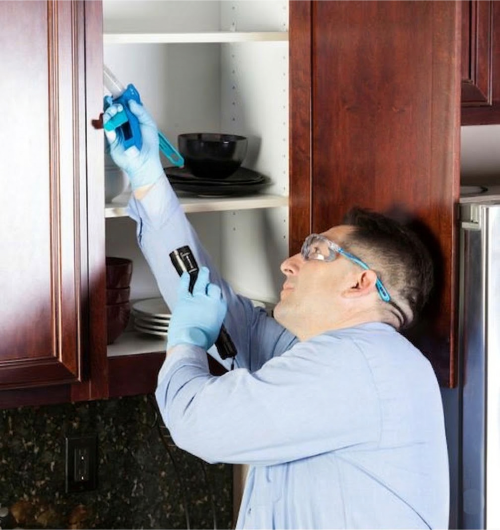
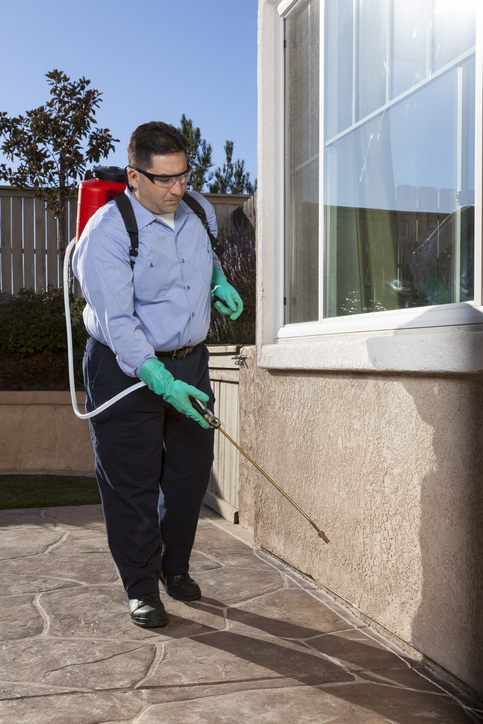
Precision Application — Where Pests Hide
How We Protect Your Property From Ants
Species Identification Before Treatment With dozens of ant species active in Southern California, treatment without identification is one of the most common reasons ant programs fail. A repellent barrier that works on one species can cause another to fracture and spread. We identify the species before any product is applied. Ants don’t show up randomly — they’re responding to something. Understanding not just which species are present, but why they’re there, is what separates a lasting solution from a temporary one.
Non-Repellent Treatment — Colony Elimination, Not Displacement Most over-the-counter sprays are repellents. They kill what they contact and push the colony elsewhere — which is why DIY ant control so often fails. Janus uses non-repellent formulations that foragers carry back to the colony undetected, exposing the queen and brood. That’s how you eliminate a colony, not just relocate it.
Termidor® Ant Control For Argentine ant pressure — the dominant species in the San Gabriel Valley — Termidor® remains the gold standard. Its transfer effect means foragers spread the active ingredient through the colony without triggering avoidance behavior. Unmatched for sustained perimeter control.
Inspect. Exclude. Control. We locate entry points, assess conducive conditions — moisture, harborage, landscape contact with the structure — and apply treatments precisely where they’ll be most effective. We share what can be corrected to reduce pressure between visits.
Residential and Commercial Properties From single-family homes to restaurants, office buildings, and commercial campuses — ant pressure is property-specific. We assess each account individually and recommend service frequency that matches actual pressure, not a default schedule.

Termidor® Hits Different — The Ants Never See It Coming
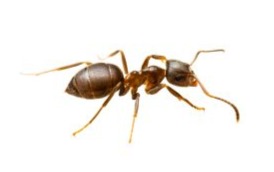
Argentine ants (Linepithema humile) don’t operate like most ant species. Rather than maintaining isolated colonies with defined territories, they form interconnected supercolonies — sprawling networks of multiple queens and millions of workers that can extend across entire city blocks. A single supercolony in Southern California has been documented spanning hundreds of miles of coastline, making Argentine ants one of the most ecologically dominant invasive species on the planet.
Standard repellent treatments don’t solve this. Push the colony in one direction and it simply re-routes around the treated zone.
Termidor® works differently. Its active ingredient, fipronil, is undetectable to foraging ants — they walk through treated zones, pick up the material, and carry it back through the colony network via normal contact and grooming behavior. The transfer effect reaches workers, queens, and brood that never contacted the treated surface directly. For Argentine ant pressure — where the colony you’re treating is likely connected to every other colony on the block — that transfer mechanism is the difference between suppression and control.
The Primary Species: Argentine, Carpenter, and Fire Ants in the San Gabriel Valley
Three ant species account for the overwhelming majority of infestations in San Gabriel Valley homes, yards, and commercial properties. They share the same neighborhoods but nest in different environments, enter structures through different routes, and respond to different treatment strategies. The Argentine ant dominates urban landscapes in sheer numbers. The carpenter ant compromises wood structures silently over time. The Southern fire ant defends its territory aggressively — and makes its presence known. Knowing which species you’re dealing with is the first step toward actually solving the problem.
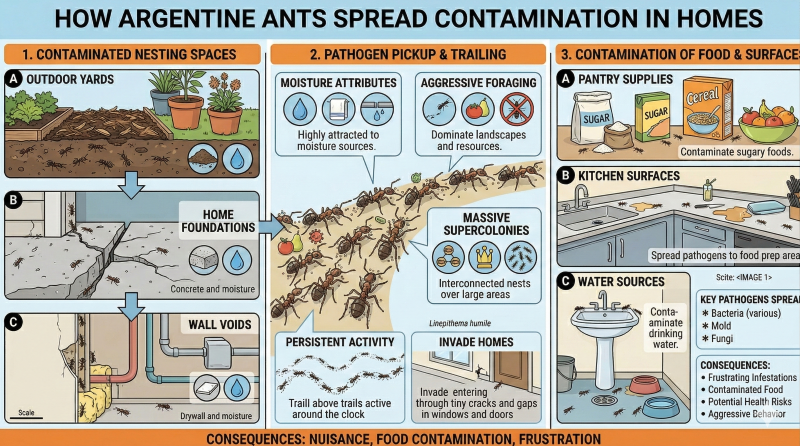
Argentine Ant (Linepithema humile)
Activity Period Year-round. Argentine ants never go dormant in Southern California’s climate — colony pressure is constant, and populations peak in spring before summer heat drives them indoors in search of moisture.
Colony Structure Unlike most ant species, Argentine ants form interconnected supercolonies with multiple queens — eliminating the single-queen bottleneck that makes other species easier to control. Workers from neighboring nests cooperate rather than compete, allowing supercolonies to span entire city blocks.
Habitat and Entry Nests outdoors in shallow soil, mulch, landscaping, and beneath potted plants and pavement. Enters structures through foundation gaps, wall voids, and utility penetrations — following moisture trails to kitchens, bathrooms, and food storage areas.
Health Risk Argentine ants contaminate food preparation surfaces, pantry supplies, and water sources by trailing through sewers, soil, and decaying matter before entering your home. Bacteria, mold, and fungi are documented hitchhikers.
Why Standard Treatments Fail Repellent sprays push the colony — they don’t eliminate it. Argentine ant supercolonies re-route around treated zones within days. Effective control requires non-repellent chemistry that foragers carry back to the colony undetected — reaching queens and brood that never contact the treated surface directly.
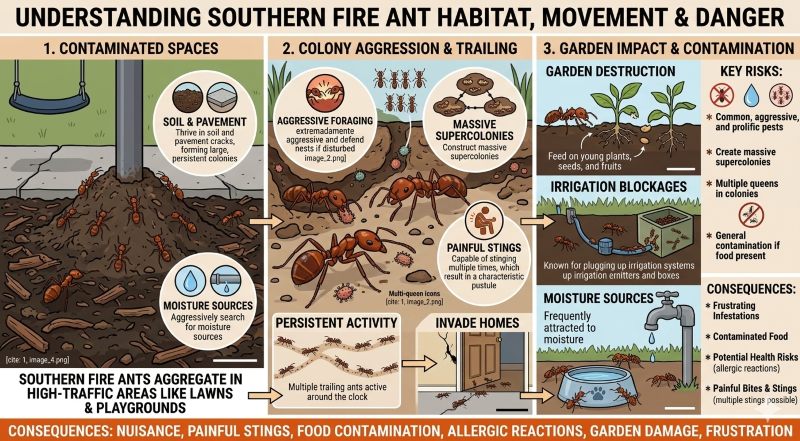
Southern Fire Ant (Solenopsis xyloni)
Activity Period Year-round in Southern California, with peak foraging activity in spring and early summer. Unlike many pest species, Southern fire ants are most active at night — making infestations easy to underestimate during daylight hours.
Colony Structure Colonies contain multiple queens and can number in the tens of thousands. Nests are connected across large areas, and when disturbed, colonies relocate quickly — making one-time treatments ineffective without addressing the full colony network.
Habitat and Entry Nests in shallow, irregular mounds of loose soil — commonly found in garden beds, along pavement edges, at the base of plants, and in moist areas near foundations. Enters structures through foundation cracks, gaps around utility lines, and door and window frames in search of food and moisture.
Health Risk The Southern fire ant delivers a painful, venomous sting and can inflict multiple stings in rapid succession. Stings produce a characteristic raised pustule and can trigger allergic reactions in sensitive individuals. Foragers contaminate pantry supplies, kitchen surfaces, and water sources by trailing through soil and decaying matter before entering the home.
Property and Landscape Damage A damaging and underreported consequence of Southern fire ant pressure — colonies plug irrigation emitters, valve boxes, and drip lines, disrupting watering schedules and causing plant loss. Garden beds, seedlings, and fruit-bearing plants are also targeted directly.
Why Standard Treatments Fail Surface sprays kill foragers but leave the colony intact. Because Southern fire ant colonies relocate rapidly when threatened, repellent treatments often scatter the problem rather than solve it. Effective control targets the colony at the source — baiting protocols that reach queens and brood are the cornerstone of lasting suppression.
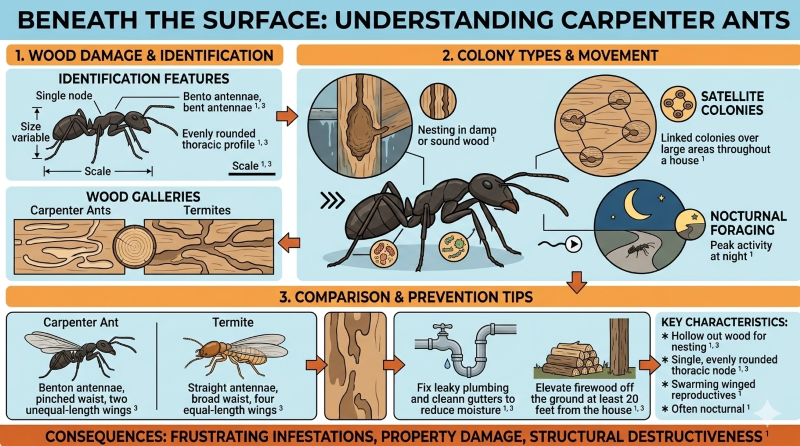
Carpenter Ant (Camponotus sp.)
Activity Period Primarily nocturnal — peak foraging occurs after dark, which is why carpenter ant activity is frequently underestimated. Populations are most visible in spring when winged reproductives swarm, often the first sign homeowners notice of an established infestation inside the structure.
Colony Structure Carpenter ants operate through a parent colony and satellite colony system. The parent colony — containing the queen and brood — is typically located outdoors in moist or decaying wood. Satellite colonies of workers and pupae establish inside structures, linked to the parent nest through foraging trails. Treating only what’s visible indoors without locating the parent colony is the most common reason carpenter ant programs fail.
Habitat and Entry Nests in moist, decaying, or water-damaged wood — fascia boards, window frames, roof eaves, and subarea structural members are common target sites in SGV homes. Enters structures through gaps around utility lines, roofline penetrations, and wood-to-soil contact points.
Identification — Not a Termite The most common misidentification in the field. Carpenter ants excavate wood to nest — they do not consume it. Look for coarse sawdust-like frass near baseboards and entry points. Key visual differences: bent antennae, pinched waist, and two unequal-length wings on reproductives versus the straight antennae, broad waist, and equal-length wings of termites.
Structural Risk Left untreated, satellite colonies expand through sound and damaged wood alike — compromising structural members, insulation, and wall voids over time. The damage accumulates silently and is often more extensive than it appears when first discovered.
Why Standard Treatments Fail Surface sprays kill foraging workers but leave the satellite and parent colonies intact. Effective control requires locating the parent colony, treating satellite locations inside the structure, and addressing the moisture conditions that made the wood attractive in the first place.
Other Common Ant Species in the San Gabriel Valley
Not every ant call fits neatly into the top three. The San Gabriel Valley is home to dozens of ant species — several of which show up regularly in homes, yards, and commercial properties and require their own identification and treatment approach.
Odorous House Ant (Tapinoma sessile)
Small, dark brown to black, and fast-moving — the odorous house ant gets its name from the distinctive coconut-like odor it releases when crushed. One of the most common indoor ant species in Southern California, it forages aggressively for sweets and moisture, forming trails along baseboards, countertops, and plumbing lines.
Colonies are highly mobile and can contain multiple queens, making them quick to relocate when disturbed — which is why repellent sprays typically scatter the problem rather than solve it. Effective control targets the colony through non-repellent baiting that workers carry back to the nest.
Need help with Odorous House Ants? Schedule a free assessment.
Pavement Ant (Tetramorium immigrans)
Small, dark brown to black with parallel furrows on the head and thorax — pavement ants nest in the soil beneath concrete slabs, sidewalk cracks, patios, and foundation edges. In the San Gabriel Valley they’re a common nuisance around driveways, walkways, and building perimeters, pushing small mounds of displaced soil to the surface as they excavate beneath hardscape.
Colonies are slow-growing but persistent — established nests are difficult to eliminate without treating below the surface where the queen and brood are protected. Baiting along foraging trails and perimeter treatment targeting nest sites are the cornerstones of effective control.
Need help with Pavement Ants? Schedule a free assessment.
Harvester Ant (Pogonomyrmex sp.)
Large, reddish-brown, and unmistakable — harvester ants are among the most recognizable ants in Southern California. They construct large, cleared mound nests in open soil, removing vegetation in a radius around the entrance and leaving a distinctive bare patch in lawns, garden beds, and landscaping.
Unlike most nuisance ant species, harvester ants are primarily an outdoor pest — they rarely enter structures but become a serious concern when nests establish in high-traffic yards, near play areas, or along property perimeters. Their sting is one of the most painful of any North American ant species and can trigger allergic reactions in sensitive individuals.
Control requires treating the nest directly — surface sprays are ineffective against deep, well-established colonies. Locating and treating the primary nest entrance is the starting point for lasting suppression.
Need help with Harvester Ants? Schedule a free assessment.
Pharaoh Ant (Monomorium pharaonis)
Tiny, pale yellow to light brown, and nearly translucent — Pharaoh ants are one of the most difficult ant species to control and a serious concern in multi-unit residential buildings, hospitals, and commercial food service environments. Colonies are massive, containing hundreds of thousands of workers and multiple queens, and are capable of spreading through wall voids, electrical conduits, and plumbing lines across entire buildings.
Pharaoh ants are infamous for “budding” — when threatened by a repellent treatment or disruption, a single colony fractures into multiple satellite colonies that scatter throughout the structure. A single misapplied repellent spray can turn one problem into dozens. Effective control requires a carefully coordinated baiting program using slow-acting non-repellent bait that workers carry back to every queen in the colony network — patience and precision are both required.
For commercial accounts and multi-unit properties, Pharaoh ant pressure should be treated as a building-wide issue, not a unit-by-unit one.
Need help with Pharaoh Ants? Schedule a free assessment.
Janus Service Guarantee
Effective pest suppression—Guaranteed results: Sighting target pests between your scheduled visits? Janus will return and re-treat the area at no additional cost to you.
ProTip: Pet Food Storage
An open bag of kibble is an open invitation.
View Tips
ProTip: Pet Food Storage
When outdoor temperatures spike or rain saturates the soil, ants move indoors seeking stable conditions — and the first food source they find becomes a pheromone-marked highway for the entire colony. Pet food is one of the most common attractants in SGV homes.
Airtight containment is the first line of defense:
- Airtight seals — store dry pet food in sealed containers with quality gaskets; odor containment cuts off the scout signal before it starts
- Hard-sided containers — plastic bags and cardboard boxes offer no resistance to foraging ants; a rigid container with a snug-fitting lid is the practical standard
- Metal containers — where rodent pressure is a factor, metal is the only reliable option; rodents will chew through plastic given sufficient motivation; a well-fitted lid is sufficient indoors
A single metal container with a snug-fitting lid addresses ant, rodent, and stored-product pest pressure simultaneously — one of the higher-return low-cost changes a homeowner can make.
At Janus Pest Management, we recognize that effective ant control requires more than perimeter sprays — it requires understanding how each species exploits landscaping, moisture, and structural vulnerabilities to establish and persist in otherwise well-maintained properties.